Patient information leaflet
Oil-Based Hysterosalpingogram
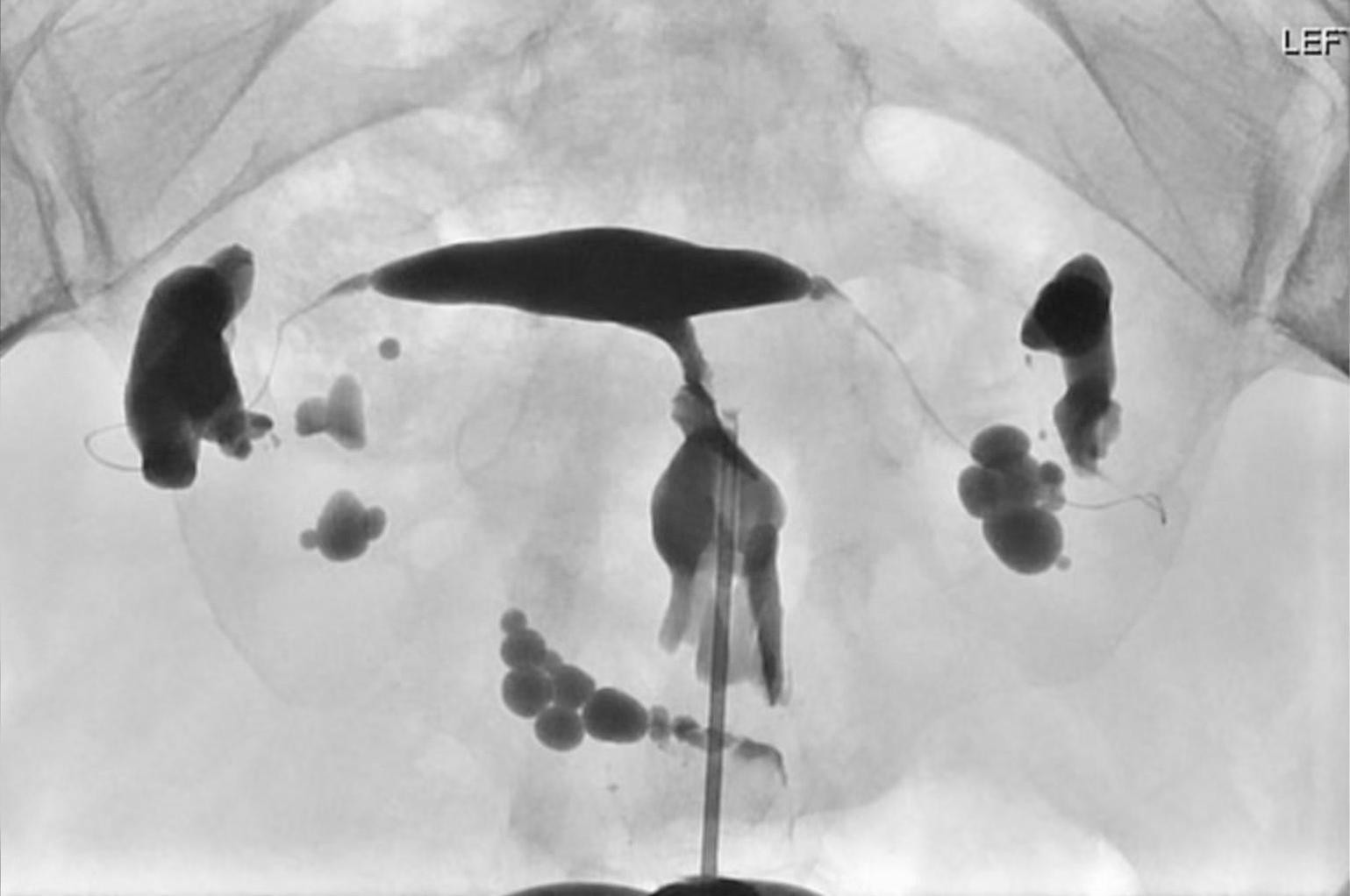
An oil-based hysterosalpingogram (often called an HSG) is an X-ray test that looks at the inside of your womb and your fallopian tubes using an oil-based contrast liquid called Lipiodol. This leaflet explains what to expect, in plain English, so you can feel prepared and at ease.
If anything here is unclear, please ask the team looking after you. No question is too small.
What is an oil-based HSG?
An HSG is a special X-ray of the womb (uterus) and the fallopian tubes. A contrast dye is passed gently through the neck of the womb so that these areas show up clearly on the X-ray pictures. In an oil-based HSG, the dye used is oil-based.
Why is it done?
The test helps your doctor see whether your fallopian tubes are open and what shape the inside of your womb is. It is commonly arranged as part of fertility investigations. Your doctor will explain the specific reason it has been recommended for you.

What happens during the examination?
The test is carried out in the X-ray department by a doctor and a small team. In general, the steps are:
- You lie on the X-ray table and the team explains each step.
- A speculum is gently inserted
- A thin tube is placed gently into the neck of the womb.
- Oil-based contrast dye is passed through the tube.
- X-ray pictures are taken as the dye outlines the womb and fallopian tubes.
- The tube is removed and the test is complete.
Preparing for your HSG
Your appointment letter or the team who booked your test will tell you how to prepare. Please follow those instructions, and let the team know about any allergies or medical conditions before the test.
If you are unsure about anything, such as timing or what to bring, please contact the department before your appointment.
Aftercare
Most people are able to go home after the test. Take things gently, and follow any advice the team gives you before you leave. Your doctor will let you know how and when you will receive your results.
Risks and when to seek help
Like any medical procedure, an HSG carries some risks. Your doctor will talk through these with you before the test, and you can ask about anything that concerns you. You may have period-like pain or cramping, pelvic discomfort, or spotting and light bleeding afterwards. There is a small risk of infection, including pelvic infection. The doctor will give you antibiotics at the time of the study to reduce this risk. Allergic reactions to the contrast medium are uncommon but possible. Because the contrast contains iodine, it can sometimes affect the thyroid or cause temporary thyroid dysfunction, so please tell the clinical team if you have thyroid disease. The doctor will talk through these risks with you on the day. Occasionally, the test may be incomplete or may need to be repeated.
When to seek help
If you feel unwell after the test, or you are worried about any symptoms, please contact the department, your GP or the doctor looking after you. In an emergency, seek urgent medical help.

Frequently asked questions
What does oil-based mean?
It describes the type of contrast dye used to show up the womb and fallopian tubes on the X-ray pictures using an oil based liquid called Lipiodol®.
Will I get my results straight away?
Please ask the team on the day how and when your results will be shared with you.
I have another question. Who can I ask?
Please contact the team who wish for you to have the test or contact our team at info@elikakashef.com

